How the Concertina project unfolded
The SWISP placement
In mid-2025, I spent two weeks in the SWISP Living Lab as part of my Master of Teaching at the University of Melbourne. The lab sits at the intersection of arts, science, and speculative pedagogy - its researchers explore how creative play can open up thinking about complex problems like climate change. I walked in as someone more comfortable with code than craft, and left having designed games, written comedy, and questioning many of my assumptions about the value of unstructured play in learning.
Exquisite Collapse
On the final day of the internship, I met Yvette Walker. Yvette had been working with “Exquisite Collapse” (like the exquisite corpse game) stories submitted by Science Gallery attendees.
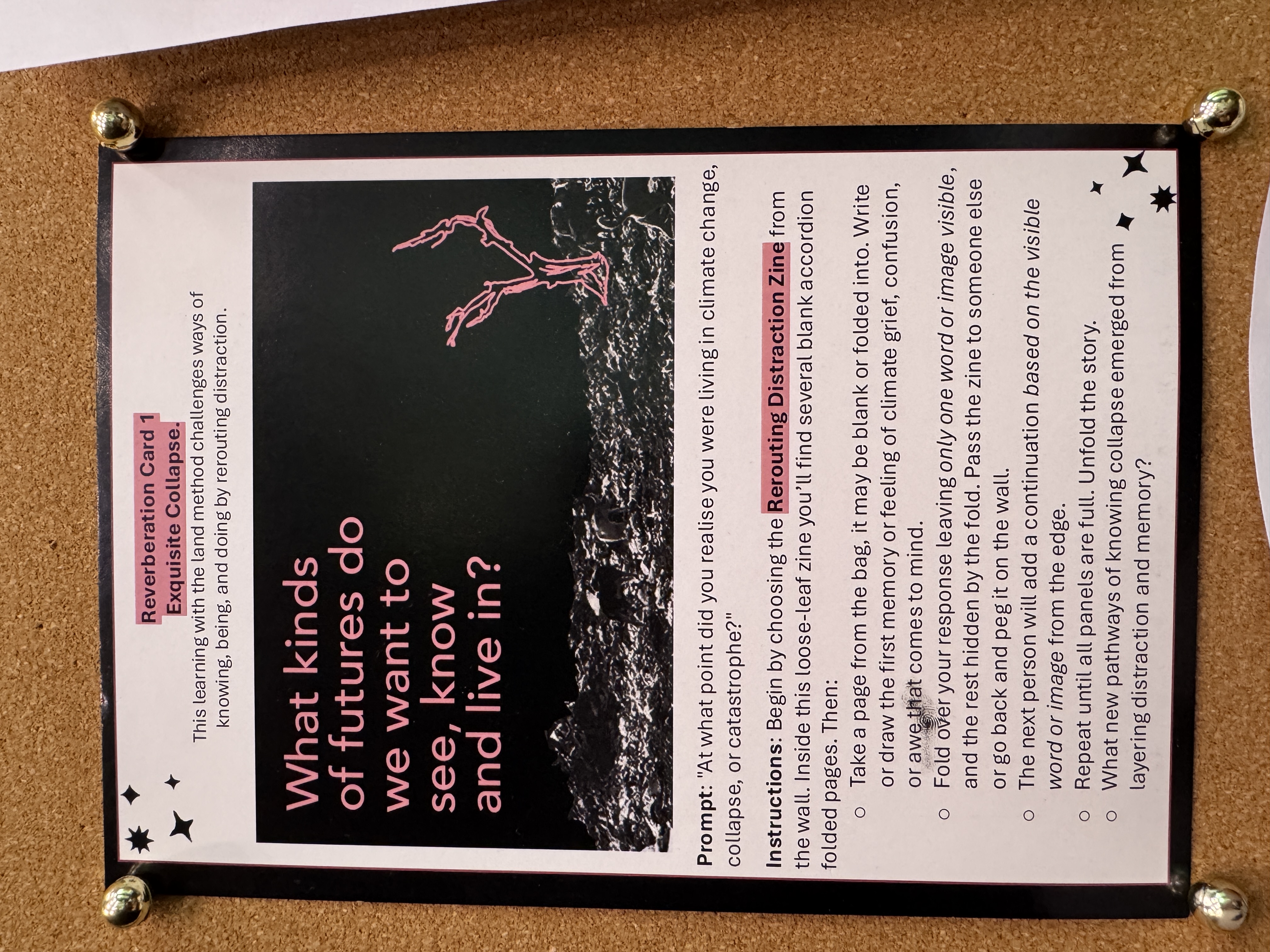
These are A4 sheets of card folded into 5 sections. Participants were invited to share their personal climate tipping-point stories in one of the ten total panels, seeing what others had drawn. Each panel is a self-contained work that also grows from, and influences, the other panels in ways no single person controlled. With the concertina before you, folding and refolding the paper allows different panels to come together, and stories that were never intended to sit side by side start speaking to each other. That combinatorial quality is lost the moment you photograph the thing flat and upload it to an archive.
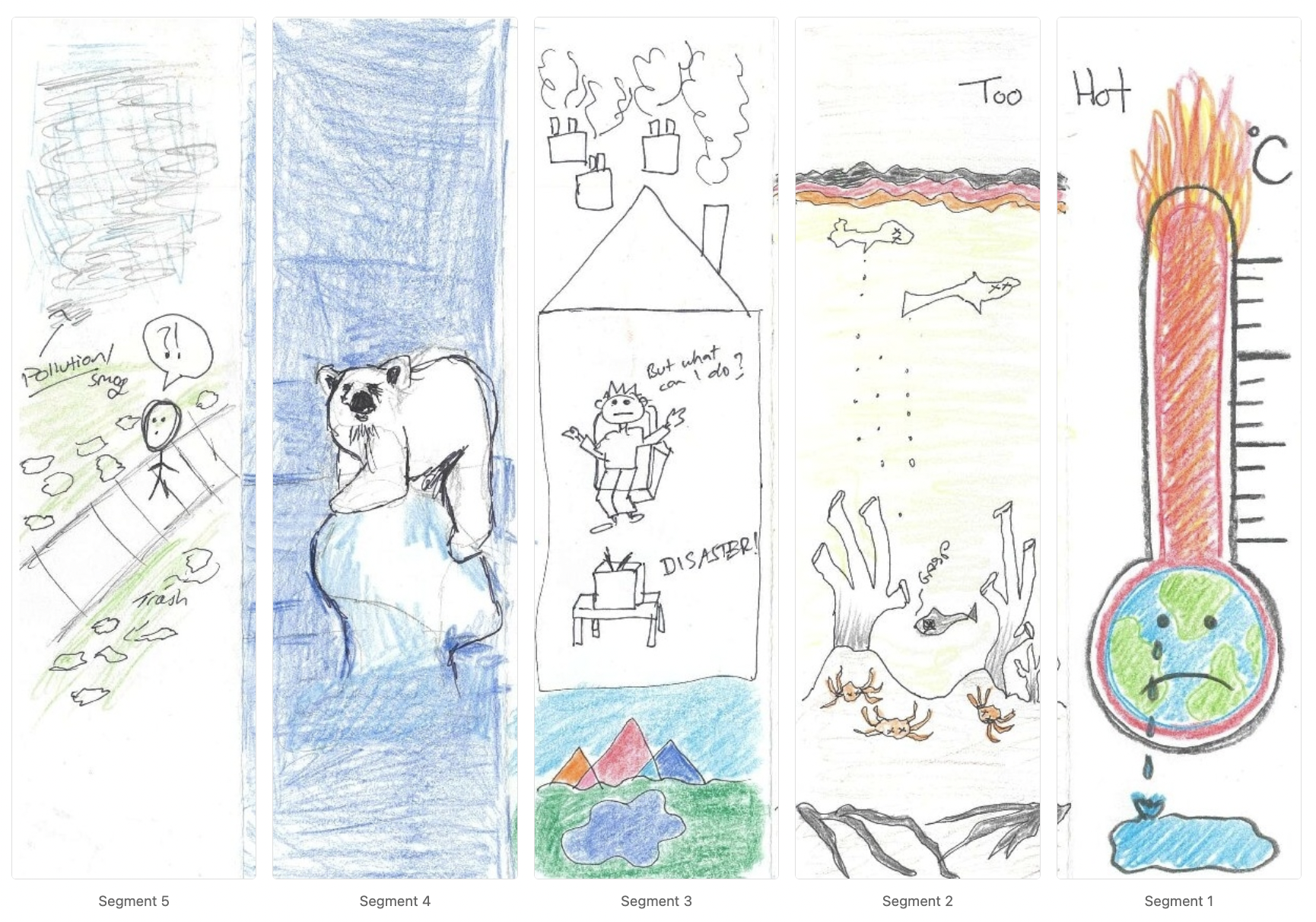
Yvette’s question was simple: would it be possible to digitally show all the different combinations?
A surprising amount of complexity
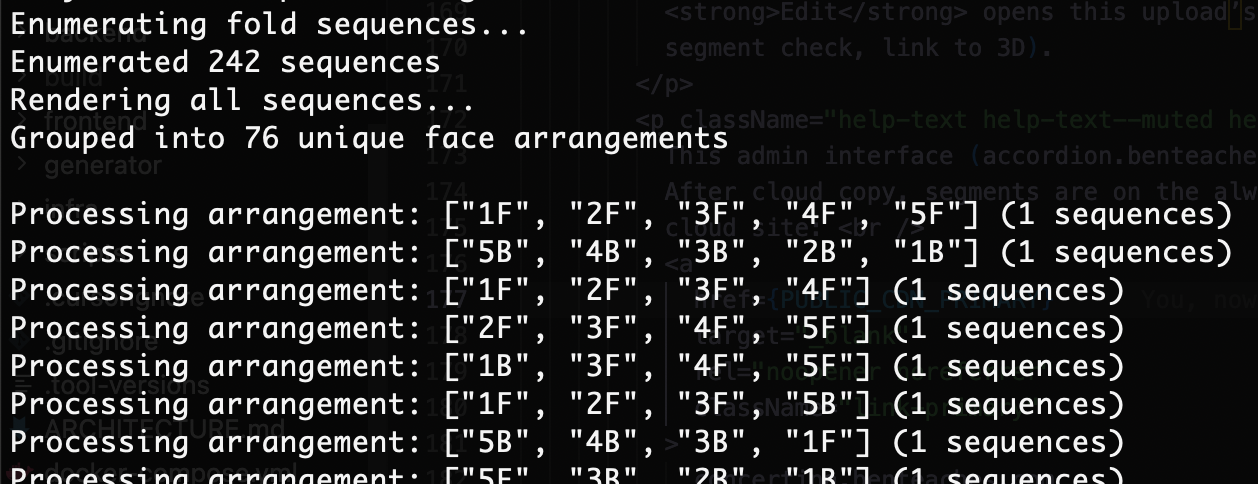
I assumed the answer would be straightforward: Enumerate the folds, filter out the physically impossible ones, map the images onto that. A few hours, tops! In practice, the problem was far more complex than I expected. I couldn’t determine a purely mathematical function that would tell me what face or faces appeared when the paper was folded in certain ways. A five-panel concertina produces 242 distinct fold sequences that resolve into 76 unique face arrangements - and determining which sequences are physically valid required modelling how paper actually behaves when segments stack, overlap, and reverse.
Modelling folds
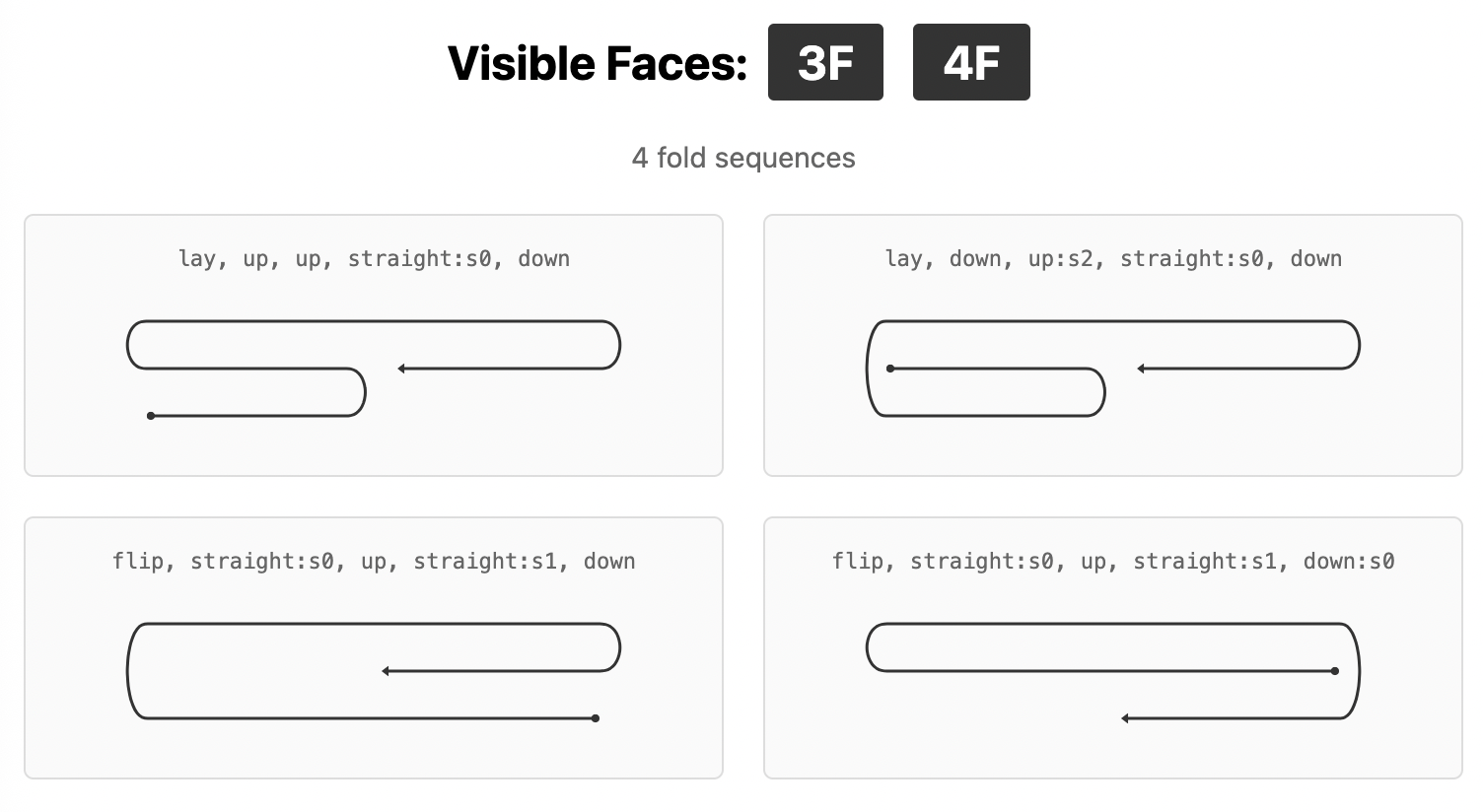
My first attempt at modelling the problem was to basically have the program plot the paper and its folds on a graph, using line intersection tests to check if particular folds produced an overlap or not. For how rudimentary it was, it worked surprisingly well. However, it was difficult to mentally visualise. I started to build a web page that rendered images of the different combinations. This helped me to see where the model produced invalid results, or missed solutions.
Much of the problems stemmed from issues with trying to work from actual coordinates on a graph. My second model was purely logical, treating the paper as a routing problem - paper stacks connected by conduits whose connectors must obey non-crossing and monotonicity constraints, like cable routing. Coordinates were only used for rendering the final result. Seeing the output of this second model rendered was exciting. Not only did I know which faces were visible, I could visually demonstrate all the different possible cross-sections that produced that exact layout.
Into 3D
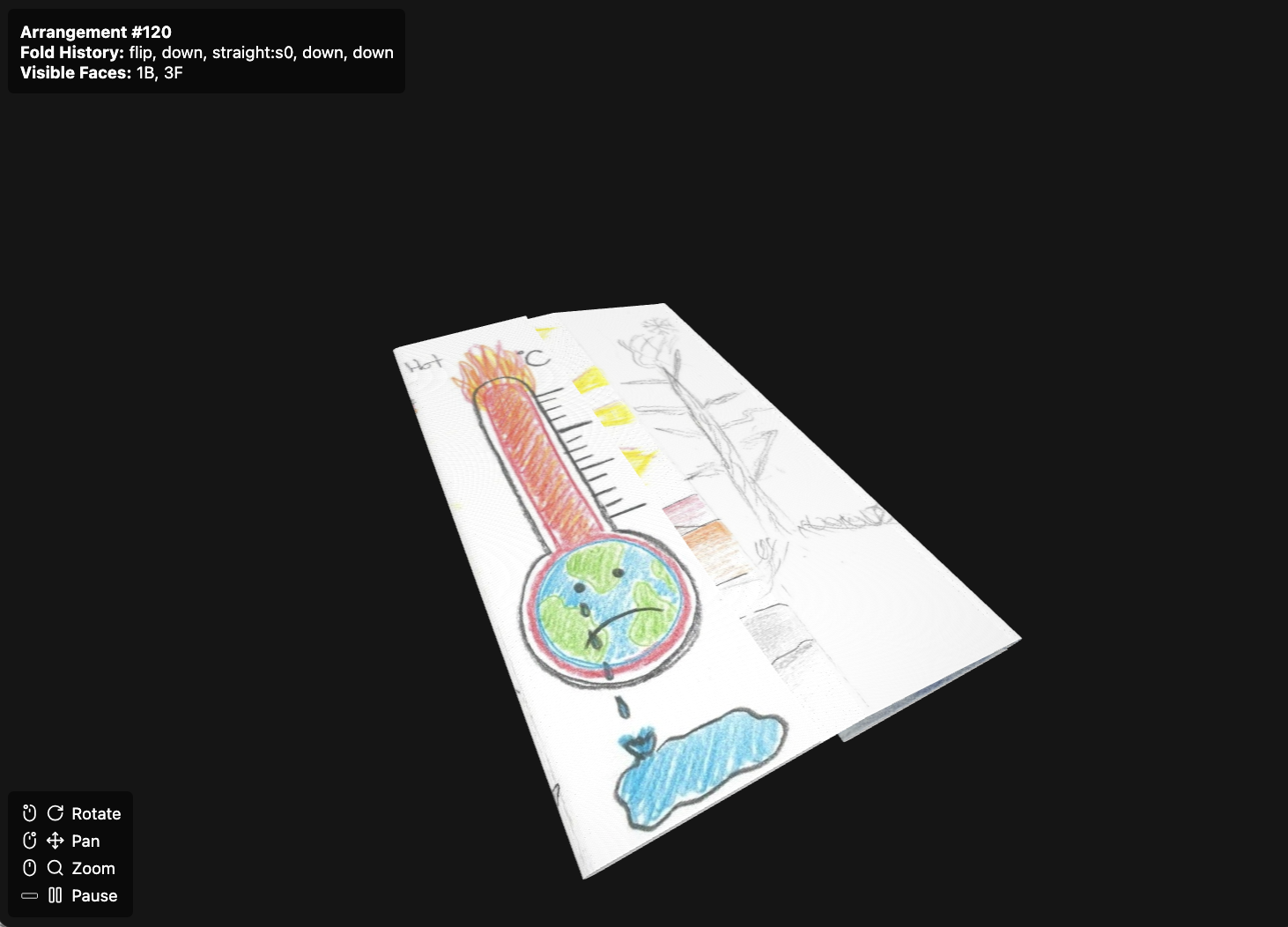
At this point, I had met the original brief, but the result was flat, hierarchical, clinical and uninteresting. I started to imagine how I could bring the same sense of depth and tactility that comes from working with the physical concertinas. I envisaged a 3d viewer where the user could fold the paper for themselves and began working with Yvette on ideas for this platform. Ultimately, I decided that a system for controlling the folding behaviour directly was going to take considerable time to implement, but I was able to project these 2D paths into 3D and then determine a way to animate between them. The key was converting each arrangement into a chain of hinged segments - about 33 per fold state - storing only the angle and length at each hinge. Animating between two arrangements then becomes a matter of interpolating those angles, and the viewer passes through the flat unfolded state on each transition so that the paper appears to physically unfold and refold.
The collection
The final piece of the puzzle was to bring together all the artworks into a unified collection, not just one concertina at a time but seamlessly transitioning between them. An operator photographs each side of a concertina; the system auto-detects the A4 rectangle and slices it into segment images. A shader crossfade dissolves one story’s panels into another’s as the paper folds and unfolds, so the end result showcases the richness of the entire collection at once whilst further building emergent narrative through the way that each panel flows from one story to the next.
It has been a very interesting and rewarding experience. I invite you to check out the final result at https://concertina.benteaches.com/collections/tipping-points-unfolded .